


Accelerated Bachelor of Science in Nursing (ABSN)
- Campus
What Is an ABSN Program?
The Bachelor of Science in Nursing: Pre-Licensure, accelerated (ABSN) program can help students transition into the nursing profession in as few as 16 months.(See disclaimer 1) This program is intended for those who have previously earned a non-nursing bachelor’s degree, completed college coursework or have no college experience, seeking a fast-track path into healthcare.
You will work to develop skills in clinical decision-making, patient assessment, care coordination and communication, along with competencies in critical thinking, evidence-based practice, ethical judgment and collaboration.
With a continued need for qualified nurses, this degree supports entry into a field that offers diverse career pathways in areas such as acute care, community health and specialty practice. The ABSN curriculum combines foundational nursing knowledge with hands-on clinical experiences, preparing you to pursue RN licensure and provide patient-centered care across a variety of healthcare settings.
A minimum of 60 transferrable credits from an accredited institution.
Credits: Fill out the Lopes Eval to find out what will transfer
Admission Requirements (Bachelor's)
- 16+ years old
- High School Graduate
- 2.8+ Unweighted GPA
OR 2.5+ Unweighted GPA and
- ACT: 19
- SAT: 1000*
Admission requirements may differ based on degree level, program and modality, or transfer status. Some programs of study may require a higher GPA and/or other qualifying criteria for admission. Please review full admission and program requirements in the University Policy Handbook.
*Math and reading only on a 1600 point scale (test date after 3/1/2016). SAT score of 1380 required for 2400 point scale (test date before 3/1/2016).
What’s It Like Going to GCU for Your ABSN?
No matter your previous field of undergraduate study, this accelerated nursing program builds upon your prior education with a sequential curriculum of coursework, labs and clinical rotations over a 16-month time span.(See disclaimer 1) While the ABSN curriculum requires commitment, it also offers a hybrid learning model to provide greater convenience and a well-rounded educational experience.
With GCU’s accelerated BSN degree, you can benefit from support, such as with Mira, GCU’s AI nursing tutor that offers customized, 24/7 assistance.
What To Expect in an Accelerated BSN Program
Flexible Online Learning
Complete your didactic nursing coursework online with a format designed for convenience and support. Through GCU’s digital learning platform, you can access readings and course materials while staying connected with instructors and peers. This structured online environment allows for consistent engagement, clear expectations and access to academic resources, helping you stay organized and on top of your coursework.

Immersive Simulation Experiences
You’ll have opportunities to refine your nursing skills and develop clinical judgment during simulation events at the Lopes Center for Nursing Simulation. You’ll practice working through clinical situations at a local simulation suite, applying the nursing process to develop nursing diagnoses and care plans. Throughout, you’ll be encouraged to develop critical thinking and clinical reasoning skills within this consistent, safe environment.

Local Clinical Rotations
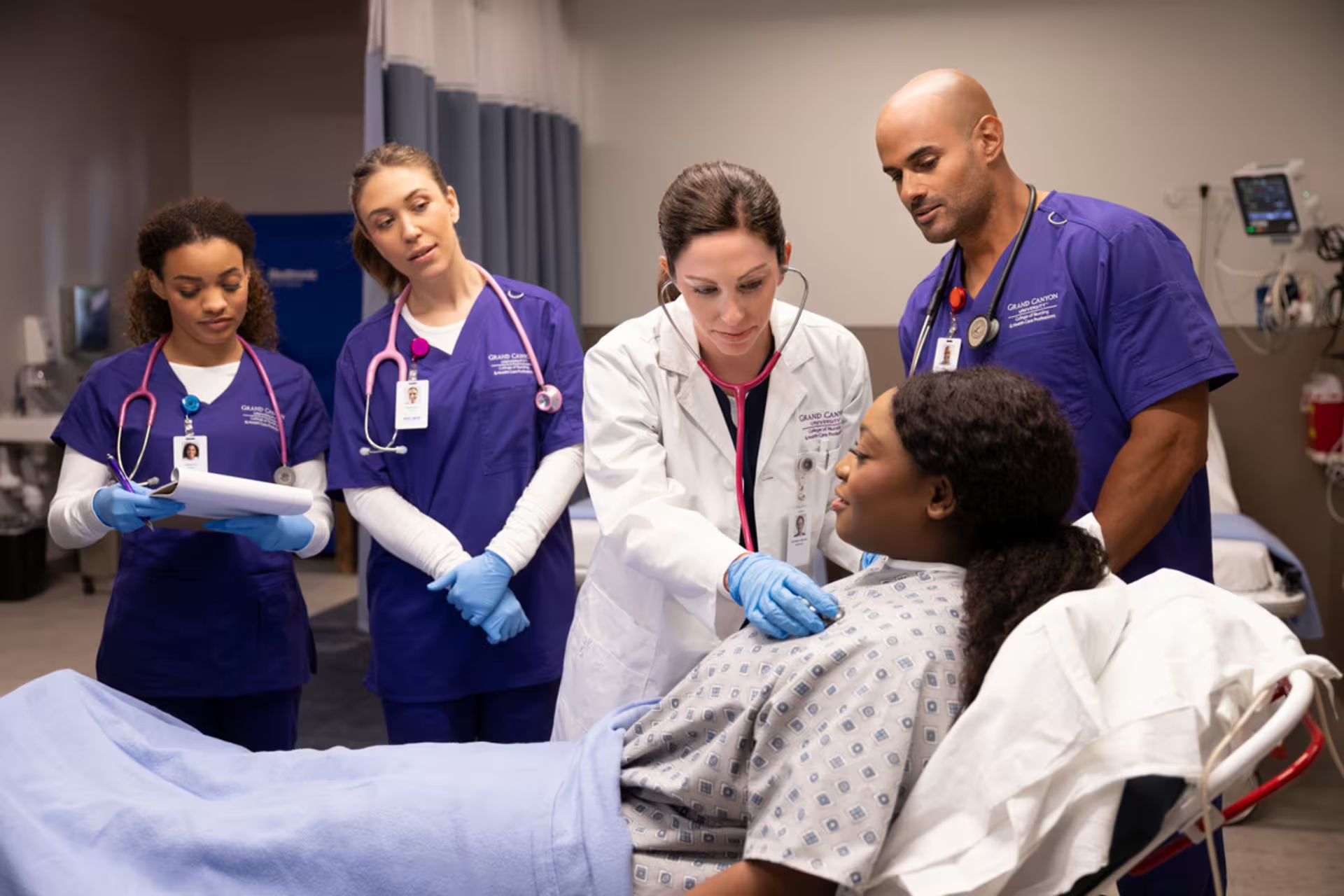
As an ABSN student, you will complete in-person skills labs, simulation experiences and supervised clinical rotations at one of GCU’s local ABSN sites and nearby healthcare facilities. With multiple locations available, you can choose an ABSN site that fits your needs while receiving consistent, quality instruction in a supportive environment.
These hands-on experiences provide exposure to a range of patient populations and care settings. You will also have opportunities to build professional connections within your local healthcare community while developing clinical skills essential to nursing practice.
Earn Your ABSN at an Accredited University
GCU has been institutionally accredited by the Higher Learning Commission since 1968. The College of Nursing and Health Care Professions shares the university’s commitment to upholding the principles and standards established by our accrediting bodies. For more information on the accreditation of nursing programs and other university licensures, please visit. our Nursing Accreditation and Regulations page.
The immersive simulation center for this accelerated nursing program has received accreditation in teaching/education by the Society for Simulation in Healthcare (SSH). Accreditation in this area reflects GCU’s ability to meet expectations in nursing simulation education.
GCU is ranked #13 nursing college in America for 20262
What Will I Study in an Accelerated Nursing Program?
In an ABSN program, you will study core nursing coursework online through a structured format that allows you to stay engaged and supported throughout your academic journey. You can access course materials and resources while connecting with instructors and peers, helping you stay on track as you build essential nursing knowledge.
This accelerated nursing program provides critical coursework for nursing practice. You’ll study important topics such as nursing foundations, health assessment skills, evidence-based practice and elements of adult health nursing. The curriculum also explores healthcare ethics, policy and nursing practice areas such as behavioral health, population health, pediatrics and women’s health.
A few of the core areas you will study include:
Foundations of nursing
Explore core nursing concepts, patient-centered care and professional standards that serve as the foundation for nursing practice.
Health assessment
Develop skills in patient assessment, including collecting health histories and performing physical evaluations to support clinical decision-making.
Adult health nursing
Focus on the care of adult populations, including the management of acute and chronic conditions across a variety of healthcare settings.
Research and evidence-based practice
Examine how research informs nursing practice and supports the use of evidence-based approaches to improve patient care outcomes.
Build Confidence in Your Skills Lab
Strengthen your clinical abilities through hands-on practice in a structured skills lab environment. You will have opportunities to practice essential nursing techniques, apply clinical concepts and receive feedback as you build confidence in your abilities before entering clinical settings.
Nursing Careers for ABSN Program Graduates
Once you earn your bachelor’s degree in nursing and pass the NCLEX-RN, you will be ready to get your license and practice as a registered nurse (RN). RNs can pursue employment in any number of healthcare settings, including hospitals, emergency rooms, physicians’ offices, schools, birthing centers and public health clinics.(See disclaimer 3) You can later decide to pursue certification and specialize in a specific area of practice, from pediatrics to gerontology.
Here are a few alternative work settings for nurses to consider after graduating from our ABSN program:(See disclaimer 4)
Patient homes
Provide care and support to patients in their homes, helping manage health conditions and promote independence.
Rehabilitation clinics
Support patient recovery by assisting with treatment plans focused on regaining strength, mobility and function.
Disaster areas
Deliver care in emergency or crisis situations, supporting individuals and communities affected by natural or public health events.
Hospice care
Provide compassionate care focused on comfort, dignity and quality of life for individuals with serious or terminal conditions.
Nursing homes
Assist with assisted and long-term care for older adults, supporting daily needs and ongoing health management.
Healthcare consulting firms
Contribute to healthcare planning and improvement efforts by supporting organizations with insights and recommendations.
2025 GCU first-time NCLEX pass rate for all Arizona locations(See disclaimer 5)
Projected number of job openings for registered nurses from 2024 to 2034(See disclaimer 6)
Affordable Nursing Tuition
GCU is committed to making quality nursing education more accessible to our nation’s future healthcare workforce. The university has not increased our campus tuition rates since 2009. In addition, prospective students are invited to explore our scholarship and grant opportunities.

Explore Your Financial Options
Talk with a university counselor today to discover various savings opportunities.
Ways To Save
Explore a range of options that can help make your nursing education more affordable. From financial aid opportunities to scholarships and grants, there are resources available to support your academic journey and help you manage the cost of your degree.
You may be eligible for financial aid to help fund your education. By completing the FAFSA, you can determine your eligibility for federal aid programs, including grants, loans and work-study opportunities.
Transfer students and working professionals can fast-track their path to a nursing career. By leveraging your prior education, you may earn your BSN in as few as 16 months(See disclaimer 1) and be ready to take the NCLEX-RN.
Review available scholarship and grant options based on academic achievement, financial need or other qualifications to help reduce out-of-pocket costs.
ABSN Program Frequently Asked Questions
To determine if the accelerated pathway is the best fit for you, read through some frequently asked questions and learn more about earning a BSN with an accelerated program.
What does ABSN mean in nursing?
Are ABSN and BSN the same?
How hard is an accelerated BSN program?
Why is the NCLEX-RN pass rate important?
Is an accelerated BSN degree worth it?
Who is the ABSN program for?
Are ABSN Programs Hard To Get Into?

It may be hard or challenging to get into an ABSN program and admission may be competitive, but it is feasible for many students. You do not need prior healthcare experience to apply to our accelerated nursing program. With multiple nursing pathways available, GCU’s accelerated Bachelor of Science in Nursing (ABSN) program is designed for individuals with a non-nursing degree, transfer credits or no prior coursework.
Even if you don’t yet meet the GPA requirements, you may be able to elevate your GPA by performing well in the prerequisite courses. Fill out the form to connect with a university counselor and review your eligibility and personalized academic plan.
Admission Details
Program Requirements
Individuals who meet our academic requirements are eligible to apply to this ABSN program. These requirements include:
Prerequisite Courses
Need to complete prerequisite coursework before applying? GCU's online Associate of Science in Pre-Nursing is a transfer-focused program that includes general education and science prerequisites designed to help prepare you to transfer into an eligible BSN pathway, including the ABSN.
Our specialized university counselors help make the admission process as seamless as possible. Working exclusively with prospective ABSN students, these counselors know the nuances of the program and provide personalized support throughout the admission process.
If you’re looking to gain admission into the ABSN program, follow these steps.
Talk to a university counselor
Connect with a university counselor to review your academic background, discuss your goals and determine your eligibility for the ABSN program.
Complete prerequisite courses and pre-admission interview
Complete any required prerequisite coursework and participate in a pre-admission interview to assess your readiness and fit for the program.
Apply to the ABSN program
Submit your application to the ABSN program and work with your university counselor to finalize your pre-enrollment plan, outlining your path to start the program.
Program Curriculum
General Education Requirements
Required General Education Courses
Core Courses


Earn your BSN degree sooner at a GCU ABSN location nearest you. Apply today.
- Secondary Applicants must transfer a minimum of 60 of the required 123 credits or have completed a baccalaureate degree which includes nine prerequisite courses/labs and 10 general education courses prior to starting the core nursing courses, which can be completed in as few as 16 months. Direct Entry Applicants that do not transfer 60 credits but meet the minimum requirements can complete these credits through GCU prior to starting the core nursing courses. Depending on the state where student has enrolled or intends to complete the program, student may require additional courses. This may include, but is not limited to, additional general education courses, courses in the major, clinical courses, or a different course sequence. See University Policy Handbook. For more information on the accreditation of nursing programs and other university approvals, please visit our University Accreditation and Regulations page.
- Niche.com. (2025). Grand Canyon University Rankings. Retrieved February 2026.
- NurseJournal. (2024, Nov. 5). The 10 Best Places To Work as a Registered Nurse, Retrieved February 2026.
- NurseJournal. (2024, Nov. 4). Where Do Nurses Work? A Breakdown of the Various Job Settings for Nurses. Retrieved February 2026.
- National Council of State Boards of Nursing. (2025). Report 1 – Number and Percent Passing of First-Time Candidates Educated in NRB Jurisdictions. Retrieved April 2026.
- Arizona Board of Nursing. (2025). 2025 RN NCLEX Quarterly Reports. Retrieved February 2026.
- COVID-19 has adversely affected the global economy and data from 2020 to 2023 may be atypical compared to prior years. Accordingly, data shown is effective August 2025, which can be found here: U.S. Bureau of Labor Statistics, Occupational Outlook Handbook, Registered Nurses, retrieved February 2026.
- Utah Department of Commerce. (2025). RN Pass Rates. Retrieved April 2026.
- Nevada State Board of Nursing. (2025). NCLEX Pass Rates for Nevada Schools. Retrieved April 2026.
- The earnings referenced were reported by the U.S. Bureau of Labor Statistics (BLS), Registered Nurses, as of May 2024, retrieved February 2026. Due to COVID-19, data from 2020 to 2023 may be atypical compared to prior years. BLS calculates the median using salaries of workers nationwide with varying levels of education and experience. It does not reflect the earnings of GCU graduates as Registered Nurses, nor does it reflect the earnings of workers in one city or region of the country or a typical entry-level salary. Median income is the statistical midpoint for the range of salaries in a specific occupation. It is very unlikely that a median salary will reflect an entry-level salary. It represents what you would earn if you were paid more money than half the workers in an occupation, and less than half the workers in an occupation. It may give you a basis to estimate what you might earn at some point if you enter this career. Grand Canyon University can make no guarantees on individual graduates’ salaries. Your employability will be determined by numerous factors over which GCU has no control, such as the employer the graduate chooses to apply to, the graduate’s experience level, individual characteristics, skills, etc. against a pool of candidates.