


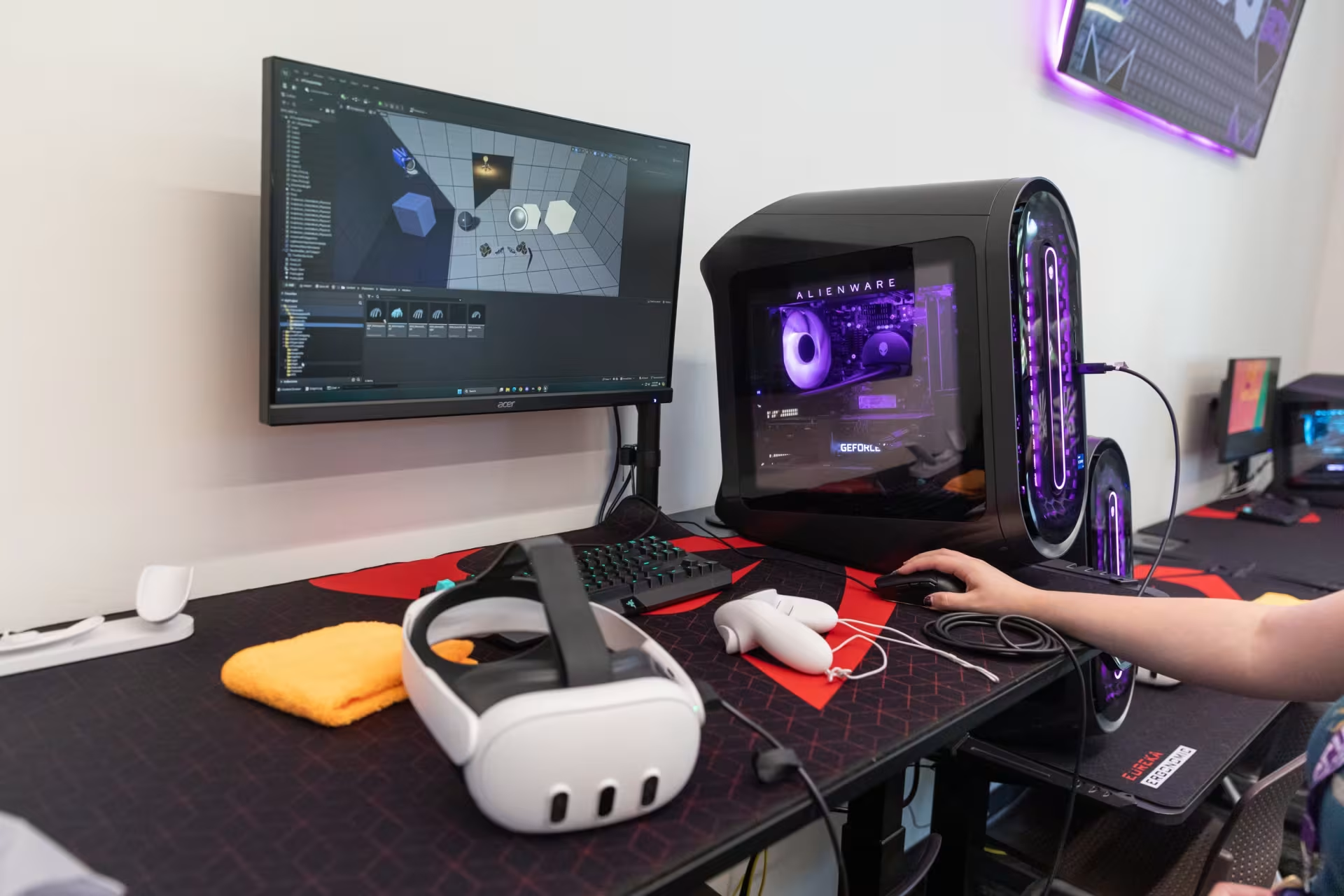
Bachelor of Arts in Game Design

Technology degrees are postsecondary programs that can prepare you for careers in areas such as software development, cybersecurity, information technology, artificial intelligence and data science. At GCU, you can pursue select technology degrees online or on campus while building skills in computing, problem-solving, algorithm and data structure and digital systems protection.
These programs may be a good fit if you’re interested in STEM careers that involve computers, innovation and emerging technologies. Graduates may pursue roles in software development, cybersecurity, IT support, systems analysis or data-focused fields, depending on their degree, experience, location and career goals.

Technology degrees can focus on different parts of the tech field, from building software to protecting networks, analyzing data or applying artificial intelligence. Use this comparison to explore which area may align with your interests and career goals.
Many technology-related degrees are available at the bachelor’s and master’s levels. Whether you would like to explore how to respond to cyberattacks, construct and operate computer networks, build the next innovative application or interpret data analysis for organizations, there is likely a degree program aligned with your interests. Explore your options in areas such as software development, computer science, cybersecurity and information technology (IT).

If you are passionate about computer programming, explore our software development degrees. Start at the baccalaureate level and then refine your skills with a master’s degree. Bridge pathways are also available for those who have already earned a bachelor’s degree in another area.

A variety of computer science degrees are available at the baccalaureate and graduate levels for students who would like to study software architecture, data structures and programming languages. Practice using advanced technology tools during hands-on projects designed for skills development.

The bachelor’s and master’s in cybersecurity degrees can equip you to take proactive and defensive measures against malicious attacks and hackers. In addition to developing practical cybersecurity skills, coursework is aligned with industry-recognized certification pathways and may include access to certification exam vouchers.

If you’re fascinated by the use of technology for the storage, processing or use of information, consider majoring in information technology. GCU offers on-campus and online IT degrees that teach core competencies in networking, system administration and data management, empowering students to implement and maintain the systems that organizations rely on.

Discover the innovative world of artificial intelligence with a BS or MS in Artificial Intelligence. Explore the theory and applications of machine learning, natural language processing, robotics and computer vision as you examine how to design, implement and evaluate computer systems that mimic human intelligence.
High school graduates and transfer students can prepare for a STEM career with GCU’s technology bachelor’s degrees. Here, you can blend your passion with purpose by studying game design or development, mobile app development or applied cybersecurity management. Develop foundational skills in your area of interest while collaborating with the STEM learning community.
Explore new dimensions of technology a master’s program. Discover forward-thinking fields like artificial intelligence, instructional technology, human-computer interaction and health informatics. A master’s degree can help you broaden your perspective, deepen your understanding or shift your professional focus.
We have doctoral emphasis programs available for learners who want to study how technology informs education, research and data-driven decision-making. Through select PhD programs, students can focus on areas such as data analytics, educational technology and the integration of technology in classroom environments. These terminal degree pathways are designed for experienced professionals who want to conduct original research, strengthen their scholarly expertise and explore how technology can support learning, leadership and innovation in their field.
If you’d like to study a narrower area of specialization without the commitment required for a full degree program, explore technology certificates. Pursue additional credentials in areas such as programming and artificial intelligence, cybersecurity and software development.
74 Matching Degrees





The right technology degree depends on your interests, career goals, preferred learning format and the types of skills you want to build. Use these factors to compare your options and narrow your path.
Think about the types of technology problems you enjoy solving, such as building apps, protecting systems, working with data or managing networks. If you enjoy coding, consider game development or software development; if you enjoy security, data or systems, explore cybersecurity, analytics or IT.
Compare the types of roles connected to each degree path before choosing a program. Software-focused degrees may align with development roles, cybersecurity degrees with digital defense, IT degrees with systems support and analytics degrees with data-focused careers.
Some technology degrees focus heavily on programming, algorithms and software design, while others emphasize business systems, cybersecurity strategy, data analysis or IT operations. Choose a path that matches the level of technical depth and specialization you want.
Consider whether an online or on-campus technology degree better fits your schedule, learning style and goals. Online programs may offer more flexibility, while campus programs may provide more in-person access to labs, clubs and peer collaboration.
"For someone who is looking into cybersecurity and gets scared about the big world that it entails, I would say that there will always be someone within the program that will be willing to teach you and guide you."
"For someone who is looking into cybersecurity and gets scared about the big world that it entails, I would say that there will always be someone within the program that will be willing to teach you and guide you."
A technology degree can open the door to a wide range of STEM careers across industries that rely on digital systems and innovation. Organizations depend on technology professionals to manage, secure and advance their digital infrastructure, making these roles essential to day-to-day operations and long-term growth. With tech-focused knowledge, you may explore career paths such as data scientist, information security analyst, computer systems analyst or software developer.
Technology major career paths you might explore include:
Data scientist
Use analytical tools and techniques to analyze data and develop insights
Computer systems analyst
Develop improvements for an organization’s computer networks to increase operational efficiency
Software developer
Plan and create computer applications, working in collaboration with programmers
Information security analyst
Protect sensitive data by securing networks and monitoring for cyberattacks
Database architect
Design, build and maintain databases to house important data
Computer network architect
Design and implement networks, including cloud computing networks
Estimated job growth for information security analysts from 2024 to 2034(See disclaimer 1)
Median annual wage for information security analysts as of May 2024(See disclaimer 2)
You can choose from on-campus and online technology degrees. Earning your degree in person offers a lively campus culture, complete with modern housing, diverse dining options and plenty of clubs and activities. Technology majors can work in our 31 fully equipped lab spaces, including the Artificial Intelligence Lab and the Cyber Center of Excellence (CCE) lab.
Alternatively, you can earn your technology degree online. Designed for those unable to attend in-person classes, online technology degrees offer the same curriculum as traditional on-campus programs. You’ll have access to our collaborative digital learning community and supportive instructors as you progress through the curriculum and pursue options in the field.

Before earning an on-campus or online technology degree, explore frequently asked questions and answers to learn more about the tech field.
What industries hire technology graduates?
What skills do technology students need to succeed?
Can I get a technology degree online?
Is technology a good career field?
What is the difference between computer science and information technology?
Are technology degrees worth it?
What technology degrees are expecting growth?
Are GCU's technology programs accredited?
Whether you choose to earn your tech degree online or on campus, you can expect a fully supportive learning experience. Numerous student resources are available to facilitate your progress, including tech-related events, dedicated lab spaces, technical support, academic support and career services. On-campus students can enjoy tech-related clubs and activities, such as the Thunderbots Robotics Club, as well as the Overclock, our tech-centric residential community that delivers an immersive cyber environment.
Quality higher education should be accessible to all. We’re committed to keeping our academic programs affordable for our students by freezing on-campus tuition rates and offering millions in institutional scholarships. An education is an investment in your future.
Discover Your Financial Options
Connect with a university counselor to learn more about financial considerations and available opportunities as you plan your next steps.
Your education is an important financial investment, and there are several ways to help manage costs while earning your degree. GCU’s university counselors are available to help you explore available options and provide personalized guidance on your estimated cost of attendance.
Complete the Free Application for Federal Student Aid (FAFSA) annually to determine eligibility for federal grants and student loans. Since some aid is awarded on a first‑come, first‑served basis, GCU recommends submitting the FAFSA as early as possible after Oct. 1 to maximize funding opportunities.
If you’ve earned college credits from another institution, you may be able to complete your degree sooner at GCU by transferring those credits. Submit the Lopes Unofficial Credit Evaluation form, then connect with a university counselor who can provide you with personalized guidance.
You may be able to reduce your college costs by applying for GCU’s on-campus or online student scholarships. We invite you to explore available institutional scholarships and determine which opportunities you may be eligible for. GCU also encourages students to seek out third‑party scholarships and grants.
Our university does not require a personal statement or essay and there is no application fee. High school students may meet the admission requirements with either a minimum GPA or SAT or ACT exam scores. Specific requirements can vary, depending on the degree or program. Your university admission counselor will help you navigate the process of applying.
You can apply to a degree program at GCU in just three simple steps. Your university counselor is standing by to assist you with any questions about the application process.
It starts with selecting the program that aligns with your goals from one of GCU's 380+ academic programs — from undergraduate degrees to post-master’s certificate programs to doctoral degrees.
Pick your program
Explore our on-campus, online or evening cohort options under the Degree Programs page to find the right program for you.
Complete our online application
Your university counselor will direct you to the online application. Fill in all required information and submit the form.
Submit supporting documents
Submit your official transcripts and any relevant test scores, and confirm with your university counselor that all forms for your desired program are submitted.

Pursue your passion for technology and find your purpose with GCU’s on-campus and online tech degrees.
Approved and verified accurate by the Assistant Dean of the College of Engineering and Technology on July 24, 2026.